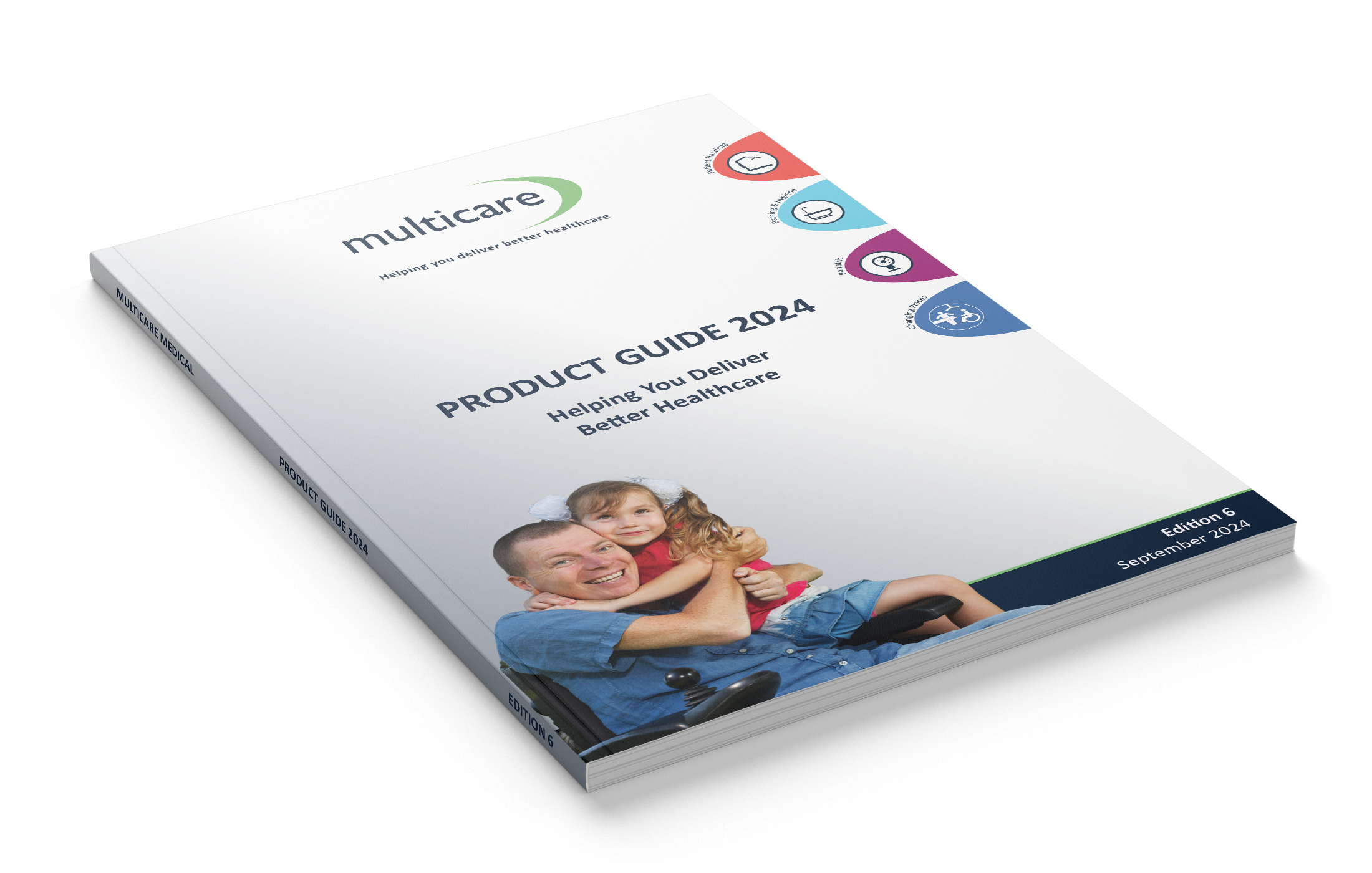

School accessibility and the September intake: How to meet the needs of SEND and disabled students
The summer is here, and many places of education will have already considered school accessibility and made provisions for disabled students ahead of the new term in September. However, there is still time to plan for the new academic year, and there’s one question that every school, college, and university should be asking:
Are we ready to meet the accessibility needs of ALL our students?
For students with disabilities or special educational needs and disabilities (SEND), school accessibility is not a luxury but a legal requirement and a vital part of inclusion. With September fast approaching, mainstream and specialist education settings across the UK need to assess their facilities and make improvements where needed.
Under the Equality Act 2010, education providers have a duty to make “reasonable adjustments” for disabled students and improve school accessibility. That includes physical changes like improving access to buildings, installing specialist equipment, and providing adequate hygiene and toileting facilities. But in reality, many education settings fall short, not through a lack of care but a lack of planning, awareness, or budget allocation. Unfortunately, last-minute fixes or reactive adaptations can leave students feeling excluded and staff under pressure.
What to review now before September arrives
Below are some key areas where schools, colleges, and universities should focus their attention now:
1. Hygiene Rooms and Changing Facilities
For students with more complex needs, a standard accessible toilet simply isn’t enough. They may require:
-
Height-adjustable changing benches
-
Ceiling track hoists
-
Wash/dry toilets
-
Adequate space for carers
-
Emergency assistance alarms
If you’re unsure what constitutes a compliant and functional hygiene room, Multicare’s Guide to Hygiene Rooms is a great place to start. These spaces are essential not just to improving SEND school accessibility, but increasingly in mainstream settings too, particularly those that welcome pupils with Education, Health and Care Plans (EHCPs).

Accessible Hygiene Room at Birmingham University
2. Ceiling Track Hoists and Manual Handling Equipment
Safe, dignified transfers are essential for students who need support with mobility. A properly installed ceiling track hoist system allows for smooth transfers between wheelchairs, toilets, changing benches, and other equipment, reducing strain on both staff and students.
Many schools rely on outdated mobile hoists or insufficient equipment that doesn’t meet current needs. This not only puts staff at risk of injury but can also seriously impact the dignity and experience of the young person.
At Multicare, we offer a full hoist installation service tailored to educational environments, including discreet ceiling track systems and specialist advice on layout and user requirements.

GH1 Ceiling Hoists at Castle School, Cambridge
3. Toilets: Is ‘Accessible’ Really Accessible?
An “accessible toilet” isn’t fit for purpose if:
-
It’s used as a storage room
-
The door doesn’t open wide enough for a wheelchair
-
There isn’t enough space for a carer to assist
-
There’s no grab rail, emergency alarm, or hygiene disposal
Make sure your facilities are more than just tick-box compliant. Audit your spaces and check whether they’re truly user-friendly for a range of disabilities, not just those who can self-transfer.
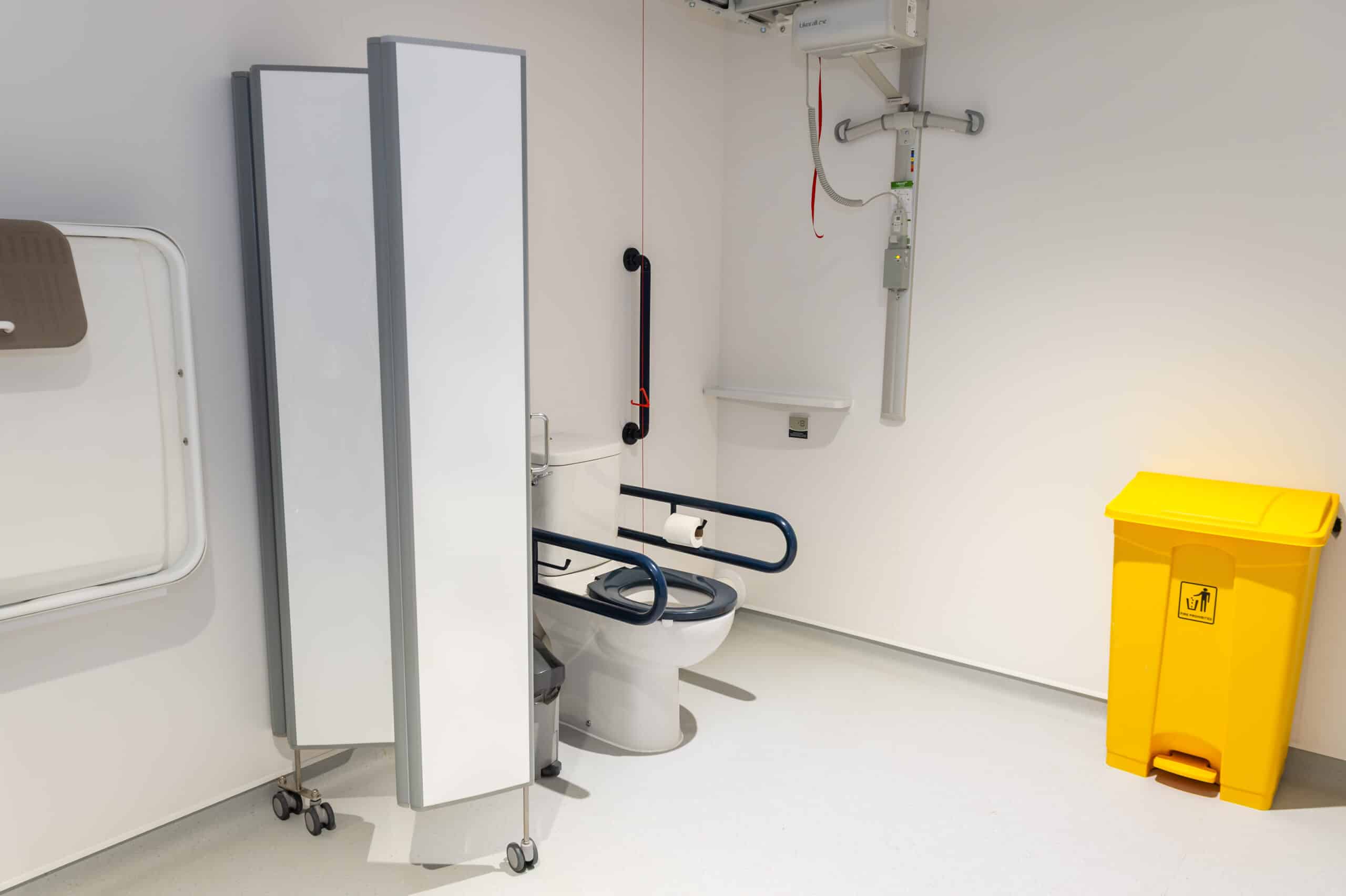
Accessible Toilet and Folding Privacy Screen
4. General Building Access and Wayfinding
School accessibility isn’t just about bathrooms and hoists. The full student journey matters. Consider:
-
Step-free level access and thresholds
-
Ramps with handrails
-
Automatic doors and wide corridors
-
Clear signage with visual/tactile markers
-
Accessible seating in classrooms, halls, and lecture theatres
Older buildings may pose additional challenges, but that doesn’t mean students should be excluded, and there is always a solution. Forward-planning and reasonable adjustments, from stairlifts to adapted desks, can make a huge difference in improving school accessibility.

Clear signage and level access at Cambridge University
SEND intake Is Growing – Are you future-proofing and planning school accessibility?
The number of children and young people with SEND is rising. According to the Special Educational Needs in England: Academic Year 2023/24 report published on 12th June 2025 by the Department for Education (DfE), over 1.7 million pupils in England have special educational needs (SEN). Many mainstream schools are now welcoming students with more complex needs, requiring specialist equipment that was once only found in SEN schools. Universities and colleges also face increasing expectations to support all students equally, both legally and ethically.
Multicare Medical is proud to support educational settings across the UK, from primary schools to universities, with:
- Bespoke hygiene room design and installation
- Ceiling track hoist systems
- Mobile hoists and changing benches
- Accessible toilet solutions
- Full room adaptations and consultancy
- Hoist and sling consultations and training
The pressures facing education teams and facilities managers are rising, and we’re here to help you get it right, whether upgrading a single toilet or designing an entire SEND suite.
To understand the minimum required technical standards and performance criteria for sanitaryware in school buildings, the ‘School Output Specification – Technical Annex 2A: Sanitaryware‘ is an important document. It’s to be read in conjunction with the Generic Design Brief (GDB) and the School
Specific Brief (SSB), and is designed for technical professionals involved in the design and construction of schools, ensuring consistent and appropriate sanitary facilities.
If you need help or guidance to ensure your school is compliant, inclusive, and ready for September, then make sure you download our free specialist guide to student hygiene rooms, which covers all the key elements of the School Output Specification.
Making education accessible to all is vital, so get in touch with the Multicare team for a no-obligation chat, and together, we can help create educational spaces that are accessible, dignified, and supportive for every student.
Call: 0800 298 6000
Email: [email protected]
Click to submit an enquiry
Multicare Medical: ‘Helping you to deliver better healthcare’ since 1988