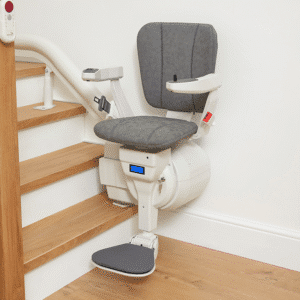

Understanding the costs of stairlifts and what help is available
What you need to know about stairlift pricing, VAT exemption, grants, and other support options
When you start looking into stairlifts for a parent or loved one, one of the first questions is usually: How much does a stairlift cost?
Followed quickly by: Can we get any help to pay for it?
It’s a reasonable concern. Stairlifts can be a big decision for families, not just emotionally, but financially too. The good news is that there’s more help available than many people realise, and that costs can vary depending on your situation, needs, and the layout of the home.
In this guide, we’ll break down:
-
Typical stairlift costs in the UK
-
What affects the price
-
Whether it’s better to rent or buy
-
VAT exemption rules
-
Grants and funding support that are available
All written in plain English, no jargon, and no hard sell.
What does a stairlift typically cost?
Stairlift costs in the UK vary depending on several factors, the biggest one being whether you need a straight or curved stairlift.
Straight Stairlift
-
Average cost: £2,000–£4,000
-
Quick and simple to install
-
Suitable for staircases that go in a straight line with no corners or turns
Curved Stairlift
-
Average cost: £4,750–£8,000+
-
Custom-built to fit your specific staircase
-
Needed if there are landings, corners, or spiral turns
Other factors that can influence the price include:
-
Powered swivel seats or footplates
-
Weight capacity upgrades
-
Optional extras (e.g. hinged rail, extended warranties, servicing plans)
At Multicare, we always carry out a free assessment before confirming any costs, to make sure you’re only paying for what you truly need and not a one-size-fits-all package.
Should you rent or buy a stairlift?
If you only need a stairlift for a short period, for example, during recovery from surgery, renting may be a good option. Stairlift rentals typically start from around £10–£15 per week, with an initial installation fee.
But if this is a long-term need (as it often is with age-related mobility changes), buying a stairlift outright is usually more cost-effective in the long run.
Tip: Ask your provider if they offer reconditioned stairlifts. These are fully refurbished units, tested to meet safety standards, and can be significantly cheaper than brand-new models.
Do you have to pay VAT on a stairlift?
Here’s some good news: Most people buying a stairlift won’t need to pay VAT.
If the person using the stairlift has a long-term illness or disability, including arthritis, limited mobility, or a chronic condition, they may qualify for VAT relief, reducing the cost by 20%.
To qualify for VAT exemption:
-
The stairlift must be for personal or domestic use
-
The user must sign a simple VAT exemption declaration (usually provided by the supplier)
You can read more about VAT relief for stairlifts in our article here.
At Multicare, we include a declaration form at the time of order and can help you complete it if you need support. For a straight stairlift costing £3,000, for example, this could save you £600 instantly.
Are there grants available for stairlifts?
Yes! You may be eligible for help with funding through your local authority or national grants.
Disabled Facilities Grant (DFG)
This is a means-tested grant of up to £30,000 in England (amounts vary in Scotland, Wales, and Northern Ireland) to help pay for home adaptations, including stairlifts.
You may be eligible if:
-
Your parent has a disability or health condition that affects mobility
-
They own or rent their home
-
You apply through your local council and pass a financial assessment
Even if you’re not eligible for the full amount, you may still receive partial funding.
To apply, contact your local council’s housing or adult social care team. You’ll usually need an assessment from an Occupational Therapist (OT) to support the application.
Other sources of support
-
Council-run assistance schemes (varies by area)
-
Age UK and other charities sometimes provide small grants or hardship support
-
NHS Continuing Healthcare funding in specific medical cases
-
Social Services equipment loans (less common for stairlifts, but worth asking)
Can you get help through social care?
In some cases, local adult social care teams may fund or supply a stairlift directly if it’s deemed essential for daily living.
This typically follows:
- A care needs assessment
- A home visit from an Occupational Therapist
- A recommendation for adaptations or equipment
This route may take longer than a private purchase, but it’s worth exploring if your parent is on a limited income and already receiving care services.
What about reconditioned or second-hand stairlifts?
Reconditioned stairlifts are a popular and cost-saving option. These are units that have been:
-
Professionally refurbished
-
Safety tested
-
Custom-fitted with new rails (particularly for curved stairs)
They can be quite a bit cheaper than brand-new stairlifts and often include warranties. Talk to Multicare about refurbished and custom-fit curved rails, combining affordability with full safety assurance.
Key takeaways
-
Straight stairlifts are more affordable and faster to install than curved models, but are only suitable for straight staircases
-
Buying is usually best for long-term use, but renting may be useful for short-term recovery
-
You can often save 20% with VAT relief if the user has a long-term condition
-
Disabled Facilities Grants (DFG) can provide partial or full stairlift funding
-
Local authorities may offer additional support based on need and means
-
Reconditioned stairlifts offer a cost-effective solution without compromising on safety
Installing a stairlift doesn’t have to be overwhelming or unaffordable. With the right advice and support, you can find a solution that fits your parents’ needs, your home layout, and your budget, while keeping them safe, confident, and independent.
At Multicare Medical, we provide free assessments, friendly advice, and support with VAT exemption and grant eligibility, with no external contractors involved.
Download our Stairlift Buyer’s Guide to get started
Call: 0800 298 6000
Email: [email protected]
Click to submit an enquiry
Multicare Medical: ‘Helping you deliver better healthcare’ since 1988