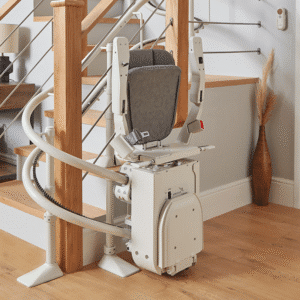

5 Signs it might be time to consider a stairlift for your mum or dad
How to know when your parent might benefit from extra support at home
It’s not easy to notice the quiet changes in your mum or dad’s daily routine, especially when they insist, as parents often do, that they’re “managing just fine.” But for many families, there comes a point where the stairs at home begin to feel like a challenge rather than a simple part of the day. If you’re starting to wonder when to consider a stairlift, you’re not alone, and you’re asking a very important question.
Stairlifts are one of the most effective ways to support elderly parents to stay safe and independent at home. But knowing when it’s time to explore the idea can be difficult, especially if no single event has triggered the concern.
This guide walks you through five clear signs that it might be time to start the conversation, and how to approach it with sensitivity and confidence.
1. They’ve fallen – or almost fallen – on the stairs
One of the most obvious signs is a fall, or even a close call. The stairs are one of the most hazardous areas in the home, especially for older adults with reduced mobility, balance issues, or joint stiffness.
Even if the fall wasn’t serious, it can knock your parents’ confidence, and that fear of falling often leads to them avoiding the stairs altogether.
Installing a stairlift can:
-
Prevent further accidents
-
Reduce anxiety for both the user and their family
-
Support ongoing independence without the need for constant supervision
According to NHS England, falls are the leading cause of emergency hospital admissions for older people, with estimates indicating that around 30% of people aged 65 and above, and about half of those aged 80 and over, experience at least one fall each year. If the stairs are becoming a danger zone, a stairlift offers a proactive, practical solution.
2. They’re avoiding the stairs altogether
If your parent is suddenly sleeping on the sofa, keeping a wash bag in the downstairs toilet, or storing clothes in the hallway, that’s a red flag.
Avoidance is often a quiet signal that stairs are becoming difficult. They may not say anything (they might not want to worry you), but their routine tells the story.
Common signs include:
-
Not using upstairs rooms, including bedrooms or bathrooms
-
Complaints about feeling tired or short of breath
-
Visible strain when attempting the stairs
These behaviours may seem small at first, but over time they can lead to disrupted sleep, reduced hygiene, and a drop in overall well-being. A stairlift makes the full home accessible again, restoring normal routines without the need to move house or drastically alter their lifestyle.
3. They’re breathless, unsteady, or struggling with balance
Not every warning sign is obvious. Often, it’s subtle physical changes that signal it’s time to explore stairlift options. Maybe your dad pauses midway up the stairs to catch his breath. Or you notice your mum holding tightly to the bannister, pulling herself up step by step.
These changes often stem from:
-
Arthritis
-
Chronic conditions like COPD or heart disease
-
Reduced strength and flexibility with age
While these may not yet prevent stair use entirely, they do increase risk, especially when carrying laundry or navigating dimly lit stairs. A stairlift eliminates the strain and helps your parent conserve energy for the things they enjoy.
4. You’re worrying about them more than usual
Sometimes it’s not one big event that prompts action, it’s a growing sense of concern. Maybe you’ve started calling more often, or you dread them answering with “I had a bit of a tumble.” That internal worry is a sign that something needs to change.
Even if you don’t live far away, you can’t always be there, and your parent may downplay the risks. Installing a stairlift not only helps your parent feel more secure at home, but it also brings enormous peace of mind to the whole family.
And if you’re the one supporting them day-to-day, it can reduce your physical and emotional load too.
5. They want to stay at home, but the house isn’t working for them
The vast majority of older adults want to age in place and to remain in the home they know and love for as long as possible. But sometimes, the home needs to evolve with them.
If your parent:
-
Is resisting the idea of moving to a bungalow or care facility
-
Wants to stay in familiar surroundings
-
Values their independence, but are clearly struggling
…then a stairlift could be the bridge between what they want and what they need.
Modern stairlifts are stylish, compact, and customisable. Whether the staircase is straight, curved, narrow, winding, or complex, there’s likely a solution that can be installed quickly and discreetly, and often without the need for major building work.
It’s not just about safety – it’s about quality of life
We often think about stairlifts purely in terms of risk prevention. But in reality, they do much more than help people avoid falls.
A stairlift can:
-
Restore access to upstairs bathrooms and bedrooms
-
Support daily routines and a sense of normalcy
-
Encourage independence and reduce feelings of helplessness
-
Boost overall well-being, confidence, and dignity
And when mobility changes happen gradually, it’s easy to overlook how much the stairs are impacting quality of life. By intervening early, you can help your parent maintain independence without waiting for a crisis.
The time to consider a stairlift may be sooner than you think.
If you’ve noticed one or more of these signs, it may be time to start the conversation. It doesn’t mean forcing a decision, but it does mean opening the door to options.
Start gently, frame it around your concern for their wellbeing, and emphasise that a stairlift is about empowerment, not limitation.
What Next?
Click to download our free Stairlift Buyer’s Guide
Use our printable “Is it Time?” checklist during your next visit
Book a no-obligation home assessment with our friendly team
We’ll help you explore whether a stairlift is the right choice — with no pressure, just honest advice based on your parent’s needs, home layout, and future goals.
Call: 0800 298 6000
Email: [email protected]
Click to submit an enquiry
Multicare Medical: ‘Helping you deliver better healthcare’ since 1988