
How to Plan a Changing Places Toilet Facility on a Tight Budget
Planning, designing, building and promoting a Changing Places toilet facility is a significant investment, but it’s one that can transform accessibility for thousands of people who rely on specialist facilities when they’re away from home.
Whether you’re planning a new public building, refurbishing existing facilities or improving accessibility within an education, healthcare or leisure environment, budget constraints are often one of the biggest challenges.
The good news is that delivering a high-quality Changing Places facility doesn’t always mean increasing the overall project budget. With careful planning, early collaboration and informed design decisions, it’s often possible to reduce costs while still creating a fully compliant, practical and future-proof space.
Understand the requirements before you begin
Every Changing Places toilet facility must meet specific design and accessibility requirements to ensure it can be used safely and comfortably by people with profound and multiple learning disabilities, spinal injuries, muscular dystrophy, multiple sclerosis and other conditions that mean a standard accessible toilet is not suitable.
Unlike a conventional accessible toilet, a Changing Places facility provides the additional space and specialist equipment needed for users who require support from one or more carers.
Key features and Changing Places equipment typically includes:
- An adult-sized height-adjustable changing bench
- A ceiling track hoist system
- A centrally positioned WC with space for carers on both sides
- A height-adjustable wash basin
- A privacy screen
- A non-slip floor and adequate circulation space
- An emergency assistance alarm
To comply with BS 8300:2018 standards, a Changing Places room must measure at least 12m2 and have a minimum ceiling height of 2.4m. Building Regulations in England require many new public buildings to include a Changing Places toilet, while other facilities choose to install one to improve accessibility for visitors, staff and the wider community.
Meeting these requirements doesn’t have to mean exceeding your budget. In fact, many of the biggest cost savings are achieved through careful planning and informed design decisions from the very beginning of a project.
Start planning as early as possible
One of the most effective ways to control costs is to consider the Changing Places toilet facility from the earliest stages of a project.
When accessibility requirements are incorporated into the initial design, architects and project teams have greater flexibility to allocate suitable space, coordinate services and plan structural requirements before construction begins.
Trying to introduce a Changing Places facility later in a project can lead to expensive redesigns, additional building work and compromises that could have been avoided with earlier planning.
Early engagement also creates opportunities to explore different layouts, equipment options and installation methods before decisions become difficult or costly to change.
Make the most of the available space
Every building presents different challenges, but a well-designed layout can make a significant difference to both cost and usability.
A Changing Places facility requires sufficient circulation space around equipment to allow carers to provide safe assistance. However, thoughtful planning can help maximise the available footprint without creating unnecessary construction costs.
Considering ceiling structures, door locations, drainage, electrical supplies and service routes early allows equipment to be positioned efficiently while reducing the likelihood of costly alterations later in the project. An experienced supplier can often identify practical solutions that maintain compliance while making the best possible use of the available space.
Choose equipment that delivers long-term value
While every Changing Places toilet facility must include essential equipment to meet the required standards, there are still decisions to make when it comes to product selection.
Choosing reliable, high-quality equipment that is appropriate for the environment can reduce maintenance requirements, improve durability and extend the lifespan of the facility.
For example, a Changing Places toilet in a busy visitor attraction is likely to experience much higher levels of use than one in a smaller community building, so specifying products that are designed for the expected level of demand is an important consideration.
It’s also worth thinking beyond the initial purchase price. Equipment that is easy to maintain, supported by readily available spare parts and backed by ongoing servicing can often prove more cost-effective over its lifetime than cheaper alternatives.
A well-balanced specification should deliver the functionality users need today while providing the reliability and longevity to support the facility for many years to come.
Think beyond the installation
The cost of a Changing Places toilet facility doesn’t end once the installation has been completed. Ongoing servicing, LOLER inspections, maintenance and eventual replacement of equipment should all be considered during the planning stage.
Choosing reliable equipment from established manufacturers can help reduce future maintenance costs, while ensuring replacement parts and servicing remain readily available throughout the life of the facility.
It’s also worth considering how easy equipment will be to access for the user and for servicing and maintenance teams. Good maintenance planning can minimise disruption and reduce long-term operating costs.
Reuse existing infrastructure where appropriate
Where refurbishment projects are concerned, there may be opportunities to retain parts of the existing infrastructure. Depending on the condition of the building, existing drainage, plumbing, electrical services or structural elements may be suitable for reuse, reducing the amount of construction work required.
Every project is different, but assessing what can be retained before demolition begins can often reveal opportunities for meaningful cost savings without compromising the finished facility.
Work with a specialist from the outset
Changing Places facilities involve much more than supplying specialist equipment. Successful projects require careful coordination between architects, contractors, consultants and specialist suppliers to ensure equipment positions, structural supports, service routes and compliance requirements all work together.
Bringing a specialist into the project early can help identify potential issues before they reach site, reducing delays, avoiding redesigns and improving overall project efficiency.
At Multicare, we regularly support projects during the design stages, providing practical advice on layouts, equipment selection, BIM support, technical guidance and installation requirements to help project teams make informed decisions.
Consider future demand for your Changing Places toilet facility
Accessibility requirements continue to evolve, and buildings are increasingly expected to accommodate a wider range of users. Designing a Changing Places facility that can continue meeting future needs may avoid costly alterations later.
This could include allowing sufficient structural support for future equipment upgrades, selecting durable finishes designed for high levels of use, or considering how servicing and maintenance can be carried out efficiently over many years. A facility designed with longevity in mind is often the most cost-effective investment over its lifetime.
Learn from previous projects
One of the advantages of working with an experienced specialist is the ability to apply lessons learned from previous installations.
At Sherwood Observatory, Multicare delivered a fully equipped Changing Places facility that formed part of a wider accessibility strategy for the visitor attraction. The project demonstrates how specialist equipment, thoughtful planning and close collaboration can create an inclusive environment that supports visitors with a wide range of access requirements while integrating seamlessly within the wider building.
Real-world projects often provide valuable insight into practical design decisions that improve usability while helping projects remain efficient and well managed.
Access practical planning resources
Planning a Changing Places toilet facility involves many different considerations, from understanding compliance requirements and selecting the right equipment to securing funding and coordinating installation.
To help organisations take the next step, we’ve developed a range of practical resources that can support projects at every stage, including:
- Taking Action Today: Your Changing Places Action Handbook
A comprehensive guide covering everything you need to know to start planning a Changing Places facility. - Changing Places Toilets – Opening Up a World of Poss-ability
Explore the wider impact that accessible facilities can have on communities, visitors and organisations. - Changing Places Toilets – Equipment Specification Guide
A practical overview of the key equipment required and how each element contributes to a safe, compliant and user-friendly facility.
Whether you’re at the very beginning of your project or refining an existing specification, these free resources are designed to help you make informed decisions with confidence.
Good planning delivers better value
Budget constraints don’t have to limit accessibility, and in fact, many of the biggest savings are achieved through better planning rather than reducing the quality of the finished facility.
Early collaboration, informed design decisions, appropriate equipment selection and experienced technical support all contribute towards delivering a compliant, reliable and welcoming Changing Places toilet facility that provides long-term value for building owners and the people who rely on it.
If you’d like further guidance, our team can support every stage of your project, from initial planning and BIM coordination through to installation, training and ongoing maintenance. Alongside our practical resources, we’re always happy to discuss your project and help you find the most cost-effective solution.
By taking the right approach from the beginning, it’s possible to create facilities that deliver lasting accessibility while making the most of the available budget.
Get in touch today to arrange your free survey and expert advice on creating a fully compliant, accessible space.
Call: 0800 298 6000
Email: [email protected]
Click to submit an enquiry
Multicare Medical: ‘Helping you deliver better healthcare’ since 1988
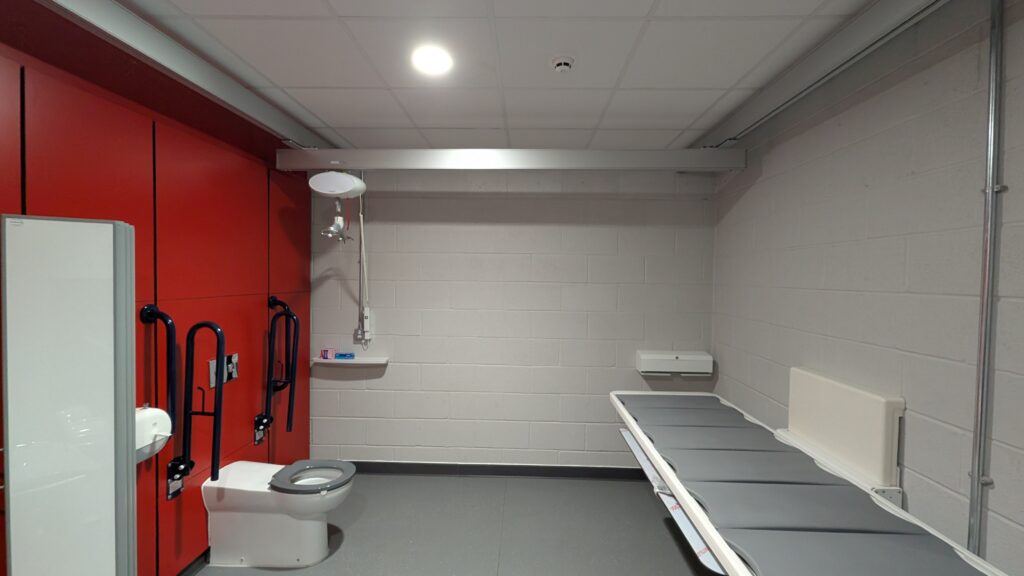
A well-planned Changing Places toilet facility provides safe, dignified and accessible facilities for people with complex disabilities and their carers.