Choosing the Right Hoist: A Practical Guide for Occupational Therapists
Part 1 of 3 – Ceiling Hoists
As an Occupational Therapist, you’re constantly balancing safe, dignified care with strict budgets, time pressures, and procurement processes that rarely move quickly enough. When it comes to moving and handling equipment, ceiling hoists are often considered the gold standard, but deciding which system is right for your client isn’t always a straightforward process.
Do you recommend a compact, cost-effective unit? A modular system that can adapt as needs change? Or a discreet option that blends seamlessly into a family home? This guide explores the main types of ceiling hoists available, the factors that matter most in prescribing, and the common pitfalls to avoid.
Why Ceiling Hoists Are the Preferred Choice for Safer Transfers
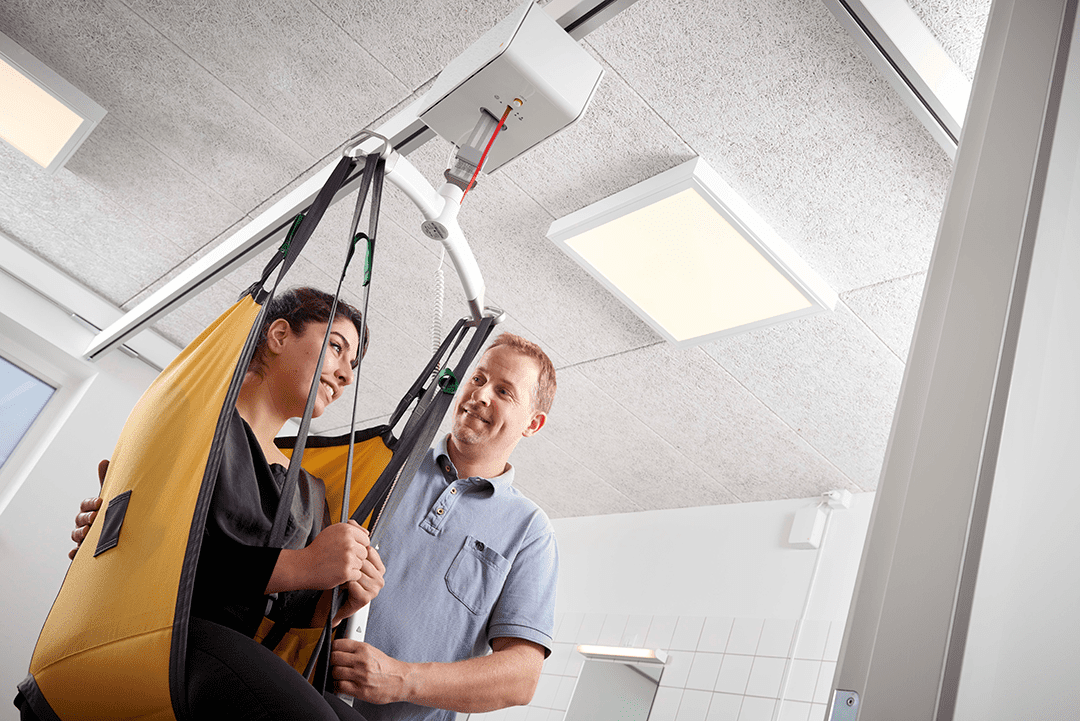
Your priority as an OT is ensuring that every transfer is safe, efficient, and protects both the client and the carer. Ceiling hoists support that goal by reducing manual handling risks, freeing up valuable floor space, and making transfers smoother and more dignified.
Some of the key ceiling hoist benefits include:
-
Safer transfers – Reduced manual handling risks protect both service users and carers
-
Space-saving design – With no bulky floor unit, ceiling systems keep environments accessible
-
Dignity and comfort – Transfers feel smoother, faster, and less stressful for everyone involved
-
Efficiency – Carers can complete transfers more quickly, freeing up time for other aspects of care
-
Future-proofing – Ceiling tracks can often be extended or adapted as needs change
- Flexible installation – Ceiling hoists can actually be fitted to the walls using wall brackets or posts if the ceiling isn’t structurally suitable
What to Consider Before Prescribing a Ceiling Hoist for a Client
The right ceiling hoist for one client may be completely wrong for another. Key factors to weigh up include:
1. Environment
- Is this a home, hospital, school, or care home?
- How will the ceiling hoist be supported?
- Can the ceiling support the hoist or will it need to be wall-mounted?
- Will transfers be room-to-room or just in a single space?
- Are aesthetics important in this setting?
2. User Needs
- What is the current level of mobility and how might it change?
- Are there any bariatric requirements?
- What are the types of transfers needed: bed-to-chair, floor-to-bed, bathing, toileting?
3. Carer Needs
- Is the hoist intuitive and easy to use?
- Can it be safely operated by one person if required?
4. Practicalities
- Are there any procurement or budget restrictions?
- Can the ceiling hoist be adapted over time?
- Is there access to training and maintenance support?
It’s also important to look beyond the client’s immediate requirements. Consider how their mobility, transfer needs and level of assistance may change over time, and whether the proposed hoist and track system can accommodate those changes. Planning for future needs at the assessment stage can help reduce the likelihood of costly modifications or replacement equipment further down the line.
Ceiling Hoists for Occupational Therapists – Hoist Options to Consider
Here are some of the main ceiling hoist solutions, the benefts of each, and the settings or environment tha you might find them most relevant:
|
|
GH1 Ceiling Hoist
Compact and ReliableBest for: Domestic use and smaller care settings A cost-effective and robust solution for everyday transfers, and a practical option when you need a straightforward, reliable solution. |

|
GH3 Ceiling Hoist
Modular and Future-ProofedBest for: Environments with heavy use including hospitals, complex care environments, and schools Modular design can be scaled and adapted as needs change, and handles higher capacities and multiple track layouts, making it highly versatile. |

|
GH1Q Portable Ceiling Hoist
Flexible Between RoomsBest for: Multi-room use or temporary installations The portable motor can be moved between tracks, and it is useful in community OT work or for clients needing access across different areas. |

|
GHZ Ceiling Hoist
Discreet and Design-LedBest for: Homes and inclusive spaces where room aesthetics and style really matter The patented design conceals the hoist inside the track, making it virtually invisible, and helps overcome resistance from families who worry that specialist equipment will feel too clinical. |

Pitfalls to Avoid
Even with experience, certain issues can trip up the prescribing process:
-
Forgetting to check the ceiling structure – Reinforcement may be needed, or the track may need to be wall-mounted with brackets or wall posts
-
Underestimating track planning – Doorways and room layouts complicate installations
-
Focusing only on cost – Short-term savings may create long-term problems
- Overlooking future needs – A system that meets today’s requirements may become unsuitable as mobility, care needs or transfer routines change, so consider whether the hoist capacity, track coverage and configuration will remain appropriate over time
-
Overlooking aesthetics – In some environments, discretion makes a big difference
-
Missing sling compatibility – Always ensure the hoist and sling work safely together and check for loop or clip sling attachments
Making Confident Decisions Under Pressure
The workload for Occupational Therapists can be extensive with back-to-back visits, complex cases, and a mountain of paperwork that never seems to shrink. With so much to juggle, it isn’t realistic to spend hours comparing hoist specifications or chasing multiple suppliers. Yet the decisions you make have a direct impact on safety, independence, and carer wellbeing. That’s why being able to make confident decisions quickly is so important. When you can match the right ceiling hoist to the right environment first time, you save yourself repeat visits, prevent delays in equipment being installed, and ultimately give your client the best outcome faster.
Understanding the strengths and limitations of different ceiling hoists, and knowing the red flags to avoid, helps you cut through the noise and prescribe with confidence, even when time is short.
Ways to Make the Process Easier
With caseloads and time pressures, streamlining your decision-making is essential. You can:
-
Arrange a joint assessment – Sharing the assessment with an equipment specialist helps reduce errors and speed up decisions
-
Work with full-service providers – Companies that manage design, installation, training, and maintenance in-house can save you from juggling multiple contacts
-
Think long-term – Consider how the client’s needs may develop and whether the proposed hoist capacity, track layout and functionality will continue to meet their requirements. Adaptable systems, such as the GH3, may offer greater flexibility as circumstances change
-
Explore leasing – Leasing options can help when budgets are restricted, but high-quality equipment is still needed
Bringing It All Together
As an Occupational Therapist, you need to prescribe hoists that balance user safety, carer wellbeing, and practical limitations. Ceiling hoists are often the most effective way to achieve this, but the right system depends on the environment, user needs, and future plans.
From the compact GH1 ceiling hoist, to the modular GH3 and discreet GHZ, there are ceiling hoist options to suit almost every scenario. By focusing on long-term suitability and working with suppliers who can provide assessments, installation, and ongoing support, you can reduce delays and feel confident in your recommendations.
In Part 2 of this series, we’ll explore mobile hoists for when ceiling hoists aren’t an option and how to choose the right mobile solution.
If you’d like tailored advice or simply want to talk through a complex case, Multicare’s team is always available to support OTs in finding the right solution.
Call: 0800 298 6000
Email: [email protected]
Click to submit an enquiry
Multicare Medical: ‘Helping you deliver better healthcare’ since 1988